

There’s Still Time to Get Better This Year
November has a way of getting crowded. The days get shorter, weekends fill up, holiday plans start taking over the calendar, and suddenly “I’ll get back to it in January” sounds pretty reasonable.
But January is still a long way off, and there’s plenty of climbing left in this year.
You don’t need to start a new training program or set some huge goal before the holidays. Just come in for your next session and give yourself one thing to work on. It might be a climb you’ve been avoiding, a movement you’ve never quite understood, or something as simple as being more deliberate with your feet.
That’s enough to make a session interesting.
Pay attention to what’s getting better
Sending a project feels great, and breaking into a new grade is worth celebrating. But if those are the only things you count as progress, you miss a lot of what actually happens when you climb regularly.
Go back to a familiar climb and notice what has changed. Maybe you’re looking at the foothold before you move instead of searching for it halfway through. Maybe a section that used to feel frantic is starting to feel controlled. You might be using less energy, trusting your feet more, or finally understanding why a particular body position works.
You can even fall at exactly the same spot and still have a better attempt.
If you know why you fell, have another move you want to try, or finally understand what has been giving you trouble, you’ve learned something you can bring to the next attempt. Sometimes getting better at climbing looks a lot like falling off the same wall with a better idea.
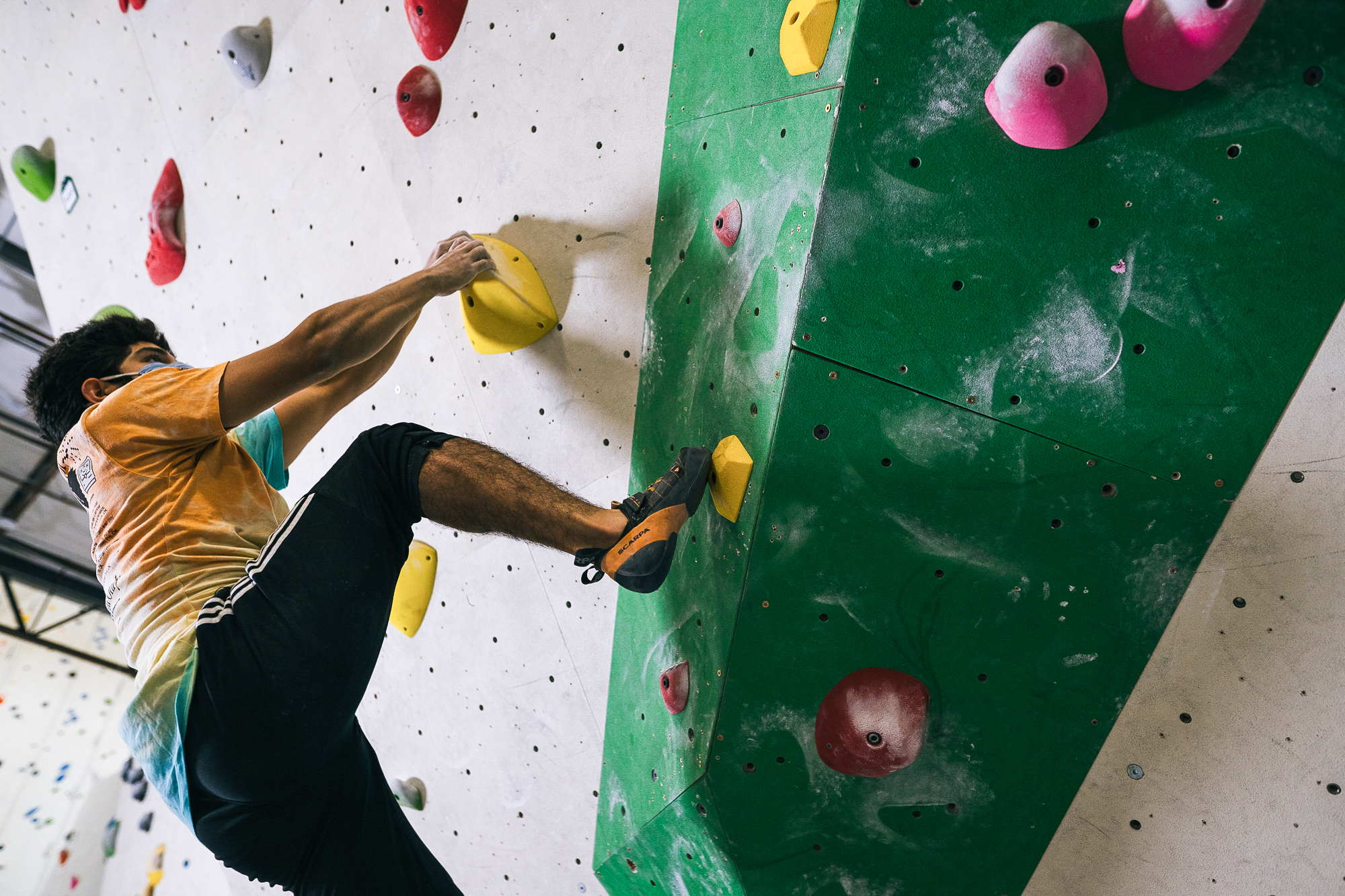
Try something that isn’t your style
Most climbers eventually figure out what they like. Some of us will happily pull hard on an overhang but suddenly become very busy when someone suggests slab. Others love technical climbing and would rather not discuss the giant move waiting for them around the corner.
There’s nothing wrong with having favorites, but it’s worth wandering outside them occasionally.
At your next session, find an approachable climb with a movement you wouldn’t normally choose. Give yourself a few attempts to figure it out without worrying about whether you finish it. Change your feet, move your hips, try the move a different way, or watch how another climber approaches the same problem.
If you’re completely stumped, ask someone. A friend, another climber or one of our team members may see something you don’t, and sometimes one small suggestion is enough to make a move suddenly make sense.
The goal doesn’t have to be the top. The goal can simply be leaving with one more movement in your toolbox than you had when you arrived.
Make rest and returning part of the plan
Some sessions feel harder than expected. A climb that went smoothly last time might take more work today. You can adjust your plans, take a break between attempts, or decide you’ve had enough for the day.
Pay attention to how you feel rather than making every visit a test. An easier session can be a chance to revisit movements you enjoy. A shorter visit can still leave you with one useful thing to remember.
If November gets busy and you miss some time, start with what feels manageable when you return. There’s no need to make up every missed session. Reconnecting with an activity you enjoy is a worthwhile reason to come back.
Don’t turn every session into a test
Every climber knows the feeling of walking into the gym expecting a great session and discovering that, for whatever reason, the body did not get the memo.
Something you climbed easily last week suddenly feels hard. Your hands are tired, your balance is off, or the warm-up feels suspiciously like a project. It happens.
Instead of fighting the session you’re having, change the plan. Climb something you enjoy, spend some time on easier terrain, work on technique, or make it a shorter day than you intended. You can still leave having done something worthwhile without squeezing a personal best out of every visit.
November can be especially unpredictable. Travel, family, work and holidays have a habit of rearranging the best-laid climbing plans. If you miss a week or two, you don’t have to make up for lost time when you come back. Start where you are, find something that looks fun, and get moving again.
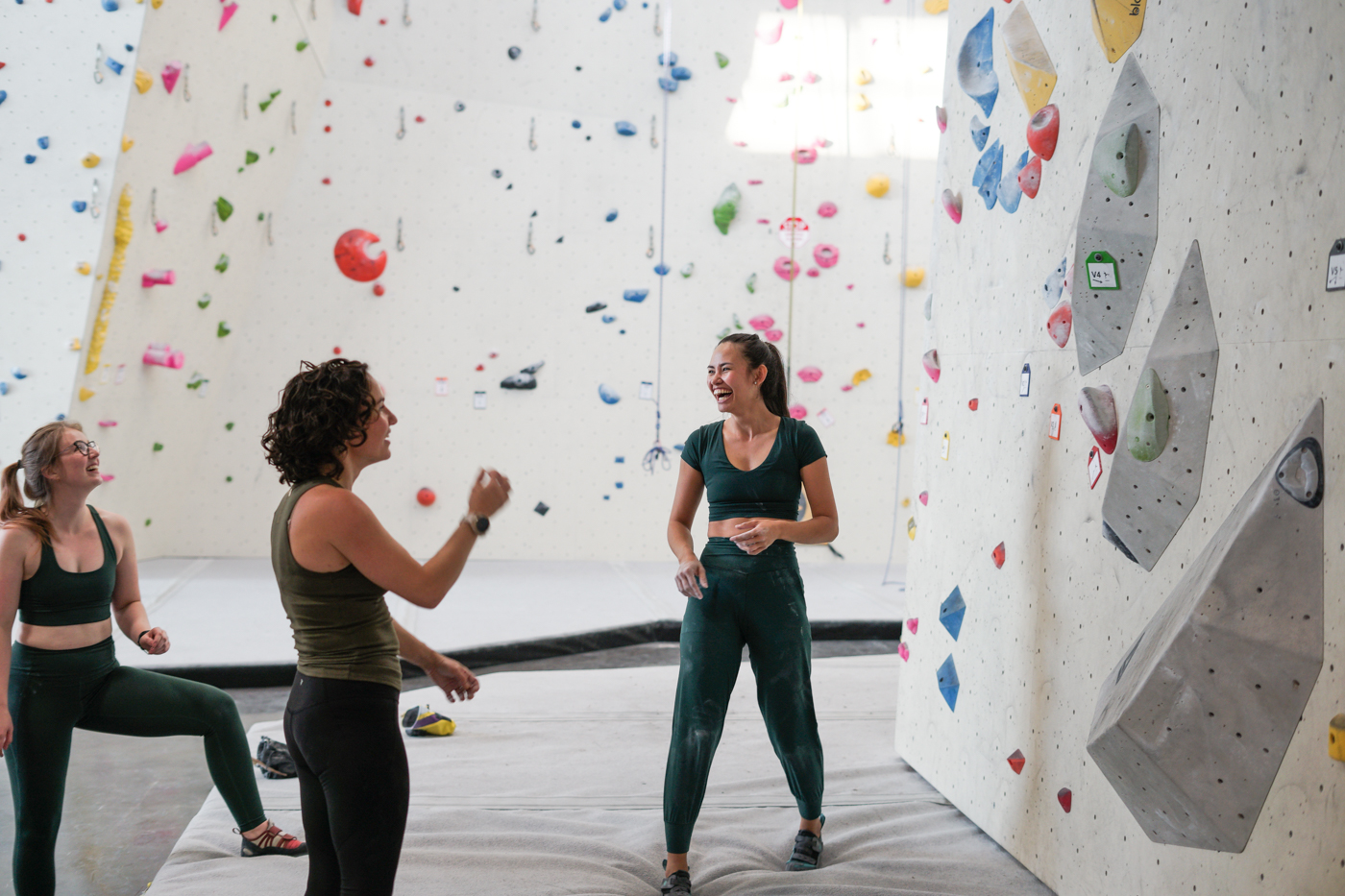
Get to know someone
There’s another kind of progress that has nothing to do with grades or technique: the gym starts feeling like your place.
Maybe you learn the name of someone you see every week. Maybe you finally ask another climber how they approached the move you’ve both been working on. A quick conversation turns into another one the following week, and before long there are people you expect to see when you walk through the door.
You don’t need to show up with a climbing crew to become part of one.
Climbing makes starting a conversation unusually easy because there’s usually something right in front of both of you to talk about. Wait until someone is resting and ask how a climb is going, or whether they’ve figured out the move that keeps giving you trouble.
If you’ve already solved it and want to offer advice, ask first. Some climbers want the beta immediately; others are having a great time trying to solve it themselves. Knowing when to help and when to let someone keep working on the puzzle is part of being a good climbing partner.
Pick one thing for November
You don’t need a November training plan. Give yourself one small challenge the next time you come in and see what happens.
Try a climb outside your usual style. Pay attention to every foot placement on a familiar route. Ask someone for help with a move you don’t understand. Introduce yourself to somebody you’ve seen around the gym. Or get back on the climb you keep walking past because you already know which move is going to give you trouble.
Before you leave, take a second and finish one sentence:
Today, I noticed…
Maybe you felt steadier on a move that used to throw you off balance. Maybe you finally understood what your feet were supposed to be doing. Maybe you met someone new, found a climb you want to come back to, or fell off your project six times and left already thinking about attempt seven.
Grades are great at telling you what you climbed. They’re not always as good at showing you how much you’re learning along the way.
There’s still plenty of year left. Come see what you can do with it.